Written by
Ellie Hart
Founder of Little Fig, mum of two and 500hr Yoga Alliance trained. Believes in bolsters, biscuits and lying down when you need to.
Pregnancy · 5 min read
Gentle positions, a few everyday swaps and when to ask for a physio referral.
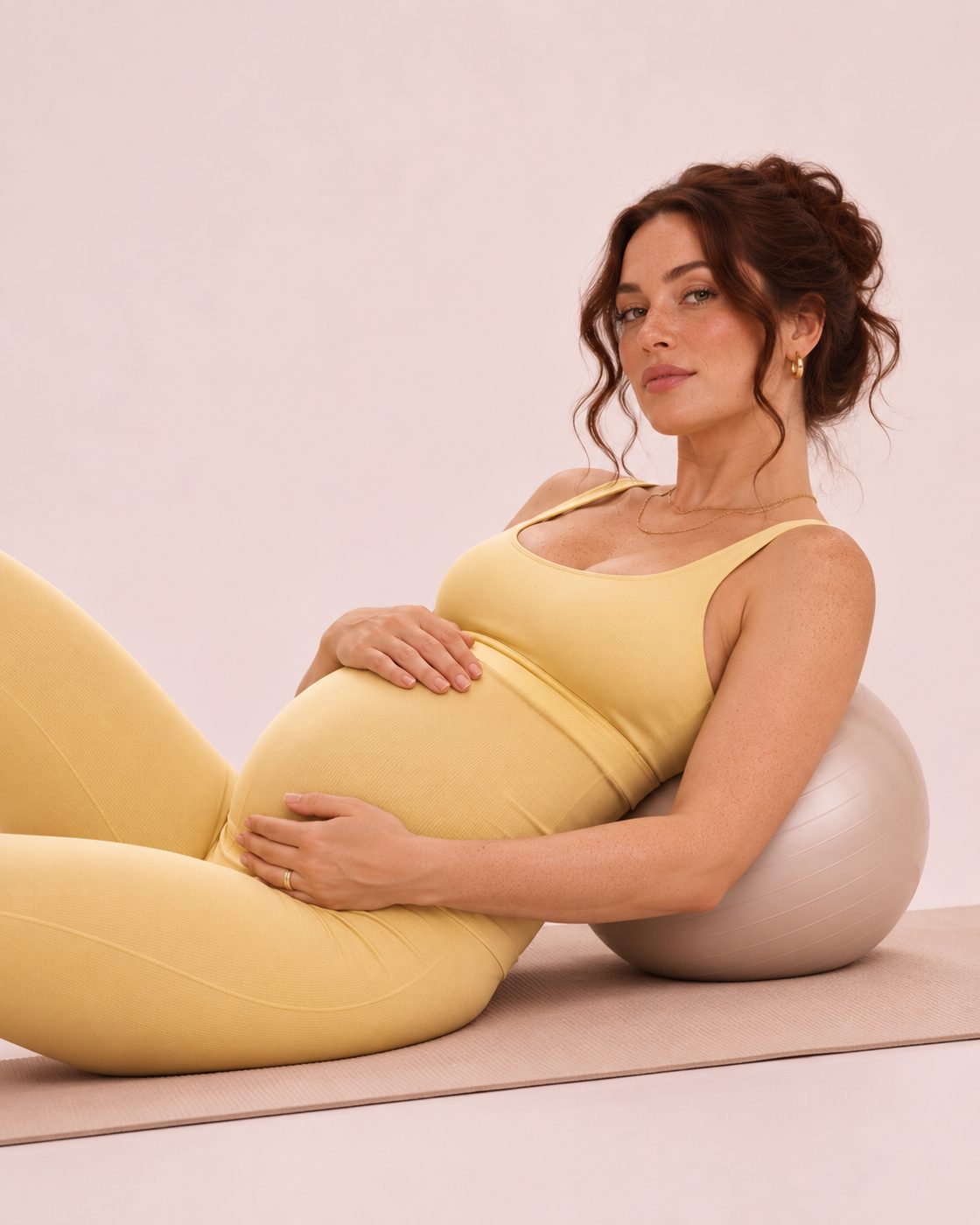
If rolling over in bed makes you wince, or there’s a sharp catch at the front of your pelvis when you climb the stairs, you are in good company. Pelvic girdle pain, or PGP, affects up to one in five pregnant women, and it is one of the questions we hear most in class.
It is common, but that does not mean you just have to put up with it. Small changes add up.
Your pelvis is a ring of bone held together by joints at the back and front. In pregnancy those joints move a little more than usual, and sometimes unevenly. The result can be pain over the pubic bone, in the lower back or buttocks, or down the inner thighs, often worse when you stand on one leg or part your knees.
“Think symmetry. Keep your knees together, move both legs as one, and the pain usually settles.”
Try this today · 5 swaps
Knees together in and out
Of bed and of the car. Sit first, then swing both legs as one.
Sit down to dress
Trousers, socks and shoes, all from a chair.
Stairs one at a time
Lead with the less painful leg going up, the other going down.
Pillow between the knees
Keeps your hips level while you sleep on your side.
Smaller steps
Shorter strides and fewer heavy bags. Ask for help with the shopping.
Tell your teacher before class starts. We swap wide-legged poses for narrower ones, keep lunges short and offer all-fours and supported kneeling options. Gentle movement and good positioning usually help more than stillness.
If pain stops you walking, sleeping or getting through the day, ask your midwife or GP for a referral to a pelvic health physiotherapist. They can assess how your pelvis is moving and give you targeted exercises, and sometimes a support belt.
Founder of Little Fig, mum of two and 500hr Yoga Alliance trained. Believes in bolsters, biscuits and lying down when you need to.
Ready when you are
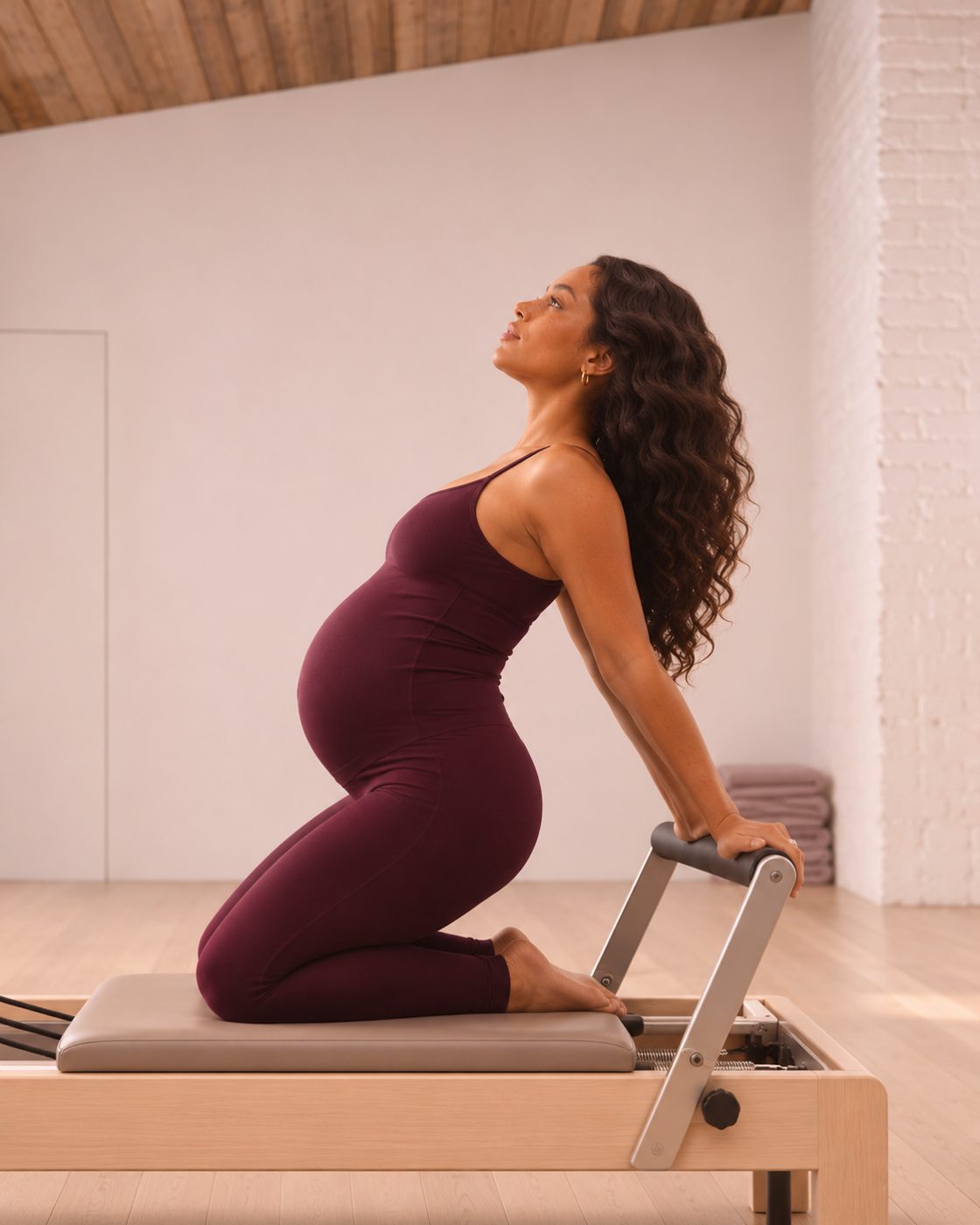
Hip openers, rest positions and the bolster set-up our mums swear by, plus what to skip in the final weeks.

Pillows, positions and a five-minute wind-down routine.

Feeds, nappies and naps are all welcome. Here’s how a class runs and what to bring.